

For many in Singapore, sashimi is more than just food; it is an experience. It is the anticipation of that perfect, melt-in-your-mouth slice of fish, a testament to freshness and culinary artistry. Yet, with its rising popularity comes a pressing concern for the discerning consumer: how can you be certain that the sashimi on your plate is not only delicious but also genuinely premium and, most importantly, safe to eat? The journey from the ocean to your chopsticks is a complex one, governed by stringent processes that separate the exceptional from the merely acceptable. This guide will equip you with the essential knowledge to navigate the world of sashimi in Singapore, empowering you to source, select, and savour this delicacy with absolute confidence.
What Truly Defines Premium Sashimi?
The term ‘premium’ is often used liberally, but in the context of sashimi, it refers to a specific set of verifiable standards that encompass the fish’s origin, its handling from catch to plate, and the skill involved in its preparation. Understanding these factors is the first step towards becoming a knowledgeable sashimi consumer and appreciating the true value behind the price tag.
The Critical Role of Provenance and Traceability
The story of premium sashimi begins in the water. World-renowned fishing grounds, such as the cold, clear waters off the coast of Japan for bluefin tuna (Maguro) or the sustainable aquaculture farms in Norway for salmon (Sake), are famed for a reason. These environments produce fish with superior fat content, texture, and flavour. True premium suppliers pride themselves on traceability. They can tell you exactly where your fish was caught and when. For instance, much of the world’s finest tuna passes through Japan’s famous Toyosu Market, where it is expertly graded and auctioned. A supplier who can trace their product back to such a source is demonstrating a commitment to quality. This transparency is a hallmark of a trustworthy vendor, assuring you that the fish has been sourced from a location known for its quality and sustainable practices.
Flash-Freezing Technology: The Secret to Freshness
It may seem counterintuitive, but in the world of sashimi, ‘fresh’ does not always mean ‘never frozen’. In fact, the opposite is often true. The most advanced technique for preserving the quality of sashimi-grade fish is super-freezing, also known as flash-freezing. This process involves rapidly freezing the fish at extremely low temperatures, typically around -60°C, immediately after it is caught and processed. This technology does two crucial things. First, it prevents the formation of large ice crystals within the muscle cells of the fish, which would otherwise rupture the cell walls and lead to a mushy texture upon thawing. Second, these ultra-low temperatures effectively kill any potential parasites, a critical food safety step. Fish that is ‘freshly chilled’ and air-flown has a much shorter shelf life and a higher risk if not handled perfectly throughout its journey. Therefore, when a supplier advertises their fish as ‘super-frozen’, it is a sign of high quality and safety standards.
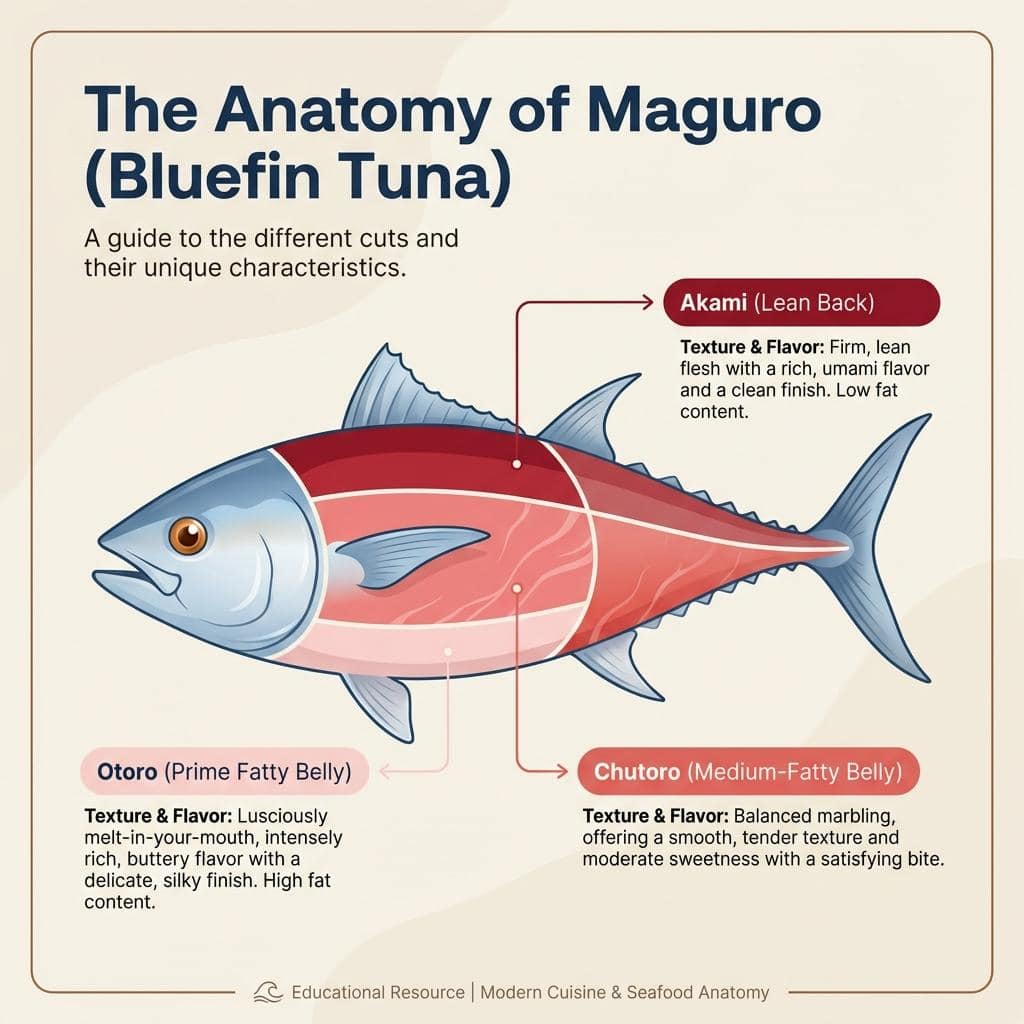
Grading Systems: A Look at Maguro (Tuna) as an Example
Not all parts of a fish are created equal. This is most evident in the detailed grading system for Bluefin Tuna. Understanding these grades can dramatically elevate your appreciation. The prized belly portion of the tuna is called toro. This is further divided into two main types. Otoro is the most coveted and expensive cut, taken from the fattiest part of the underbelly. It is intensely marbled, pale pink, and has a rich, buttery flavour that melts in your mouth. Chutoro is the medium-fatty belly cut, found closer to the skin. It offers a perfect balance between the richness of otoro and the leaner meatiness of the fish’s main body. Finally, akami is the lean, deep-red meat from the sides and top of the fish. It is the most common cut, with a firm texture and a more subtle, yet complex, flavour. A supplier who offers these distinct grades and can explain their characteristics is demonstrating true expertise.
Your Go-To Guide for Sourcing Sashimi in Singapore
With a solid understanding of what constitutes quality, the next step is knowing where to find it. Singapore offers a variety of options, each with its own set of considerations. Whether you prefer the convenience of online shopping or the experience of selecting your fish in person, here is how to navigate the local landscape.
Reputable Online Suppliers: The Rise of Home Delivery
The convenience of having premium sashimi delivered to your doorstep is undeniable. However, the online marketplace requires careful navigation. A trustworthy online supplier will provide extensive information on their product pages. Look for key details such as the country of origin, whether the fish is wild-caught or farmed, and, crucially, its processing method (e.g., ‘super-frozen’ or ‘air-flown’). They should also be transparent about delivery schedules, indicating when fresh shipments arrive, which is often two to three times a week from key locations like Japan. Avoid vendors with vague descriptions. Instead, choose those who demonstrate their commitment to maintaining the cold chain, the unbroken refrigerated journey from the source to your home. Customer reviews and a professional, informative website are also good indicators of a reliable business.
High-End Supermarkets and Japanese Specialty Grocers
For those who prefer to see their fish before buying, specialty grocers and the seafood counters at high-end supermarkets are excellent options. Establishments like Meidi-Ya or Isetan’s supermarket section have a long-standing reputation for quality. When at the counter, do not hesitate to engage with the staff. A knowledgeable fishmonger should be able to answer your questions about the fish’s origin, arrival date, and whether it is suitable for raw consumption. Observe the cleanliness of the counter and how the fish is displayed. It should be laid neatly on a bed of ice, not soaking in water, and whole fish should have clear, bright eyes. These physical stores offer the advantage of expert curation and the ability to buy the exact portion size you need.
The Wet Market Myth: Navigating Local Markets with Caution
Singapore’s wet markets are a vibrant part of the local culture, offering a vast array of fresh produce. However, sourcing sashimi-grade fish from a typical wet market stall can be risky. The primary concern is the integrity of the cold chain. Most fish at a wet market is intended to be cooked thoroughly, and the stalls may not be equipped with the super-freezers or precise temperature controls required to keep fish safe for raw consumption. Cross-contamination can also be a risk. If you choose to explore this option, you must proceed with extreme caution. Only buy from a trusted vendor you have a long-standing relationship with, and who explicitly markets certain fish as ‘sashimi-grade’. Ask them directly about their source and how they handle the fish to ensure it remains safe to eat raw. For most consumers, the risks at a general wet market stall will outweigh the potential benefits.

Becoming a Savvy Sashimi Consumer: A Practical Checklist
Developing the ability to visually assess the quality of fish is an invaluable skill. Your senses are your best tools in determining freshness and quality. Combined with proper handling techniques at home, this knowledge ensures a safe and enjoyable sashimi experience from start to finish.
The Visual and Olfactory Test: What to Look For
Before you make a purchase, take a moment to inspect the fish closely. Whether it is a pre-packaged slice or a larger loin at the counter, here are the key indicators of high quality:
- Color: The flesh should be vibrant and clear. For tuna, look for a rich, deep red or a lustrous pink for the fatty cuts. Salmon should be a bright, vivid orange. Any dullness, browning around the edges, or discoloration is a red flag.
- Sheen: High-quality fish has a natural, moist sheen that makes it look fresh and appealing. It should not look dry, sticky, or overly wet.
- Flesh Integrity: The muscle fibres of the fish should be tightly packed together. Press it gently if possible; it should feel firm and spring back. Avoid fish that looks soft, mushy, or has visible gaps between the muscle flakes, as this indicates it is losing its freshness.
- Smell: Fresh, high-quality fish should have a clean, neutral scent that is reminiscent of the ocean. It should never have a strong “fishy” or ammonia-like odour. Trust your nose; if it smells off, do not buy it.
Safe Handling and Consumption at Home
Once you have brought your premium sashimi home, your responsibility in maintaining its quality continues. Proper storage and handling are critical for food safety. If you purchase frozen sashimi, thaw it correctly by placing it in the refrigerator for several hours. Never thaw it at room temperature, as this encourages bacterial growth. Once thawed or if purchased fresh, it is best to consume it on the same day. Store it in the coldest part of your refrigerator, which is usually the back of the bottom shelf. When preparing the sashimi, use a dedicated chopping board and a sharp knife that has been thoroughly cleaned. This prevents cross-contamination from other foods. Always wash your hands before and after handling raw fish.
The Final Slice: Enjoying Sashimi Safely and Confidently
Sourcing premium sashimi in Singapore is a rewarding endeavour that culminates in a sublime culinary experience. The key to success lies in education and diligence. By prioritising suppliers who value transparency and can verify the provenance of their fish, you are already halfway there. Understanding that ‘super-frozen’ technology is a mark of quality and safety, not a compromise, allows you to access the best fish from around the world. Finally, learning to trust your own senses to identify the visual and olfactory cues of freshness gives you the ultimate control over your selection.
Armed with this knowledge, you can confidently explore the diverse and delicious world of sashimi. Start with a reputable online store or specialty grocer, ask questions, and pay attention to the details. The result will be a deeper appreciation for this Japanese delicacy and the peace of mind that comes with knowing you are enjoying it in the best and safest way possible.
Disclaimer: While sourcing high-quality fish significantly minimizes risks, consuming any raw seafood carries some inherent risk. Individuals with compromised immune systems, pregnant women, young children, and the elderly should exercise caution and may be advised to avoid raw fish. The information provided here is for general knowledge and is not a substitute for professional medical advice.

Jeremy Lee is a seasoned digital marketing director and strategist with over two decades of experience in the industry. As the founder of Sotavento Medios, I manage a diverse portfolio of over 50 businesses, helping brands grow through advanced search strategies and digital innovation. My work focuses on bridging the gap between traditional search engine optimisation and the evolving world of AI-driven answer engines.